Crimson Tide Flameback Cichlid 'Python Island' (Pundamilia nyererei )
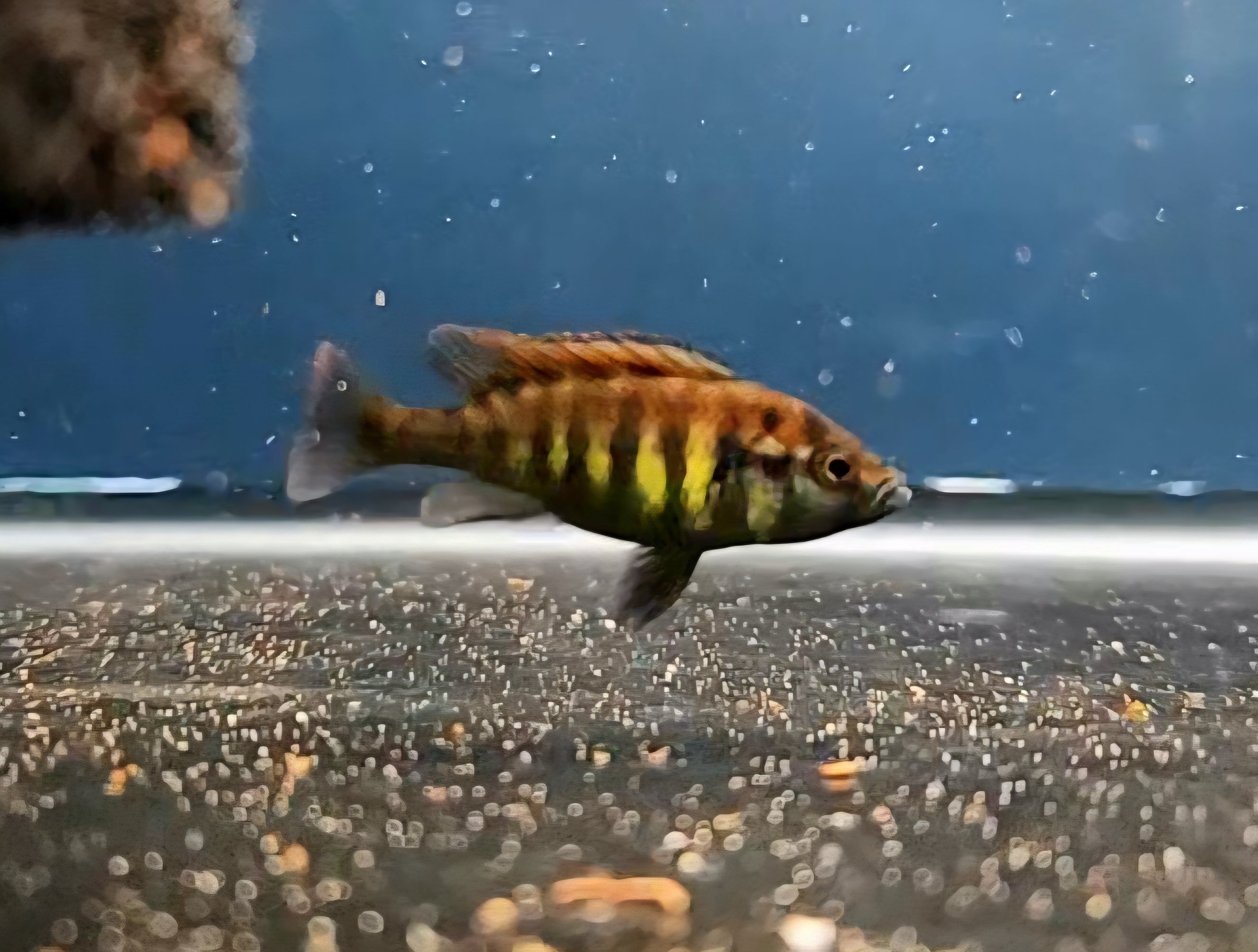
Crimson Tide Flameback Cichlid 'Python Island' (Pundamilia nyererei )
Product type
Price
Price
$19.99
Availability
Out of stock
Screen size
Screen resolution
RAM
Storage
CPU
Connectivity
Megapixels
Operation system
Product dimensions
Weight
Сountry of origin


Product information
Common Name
Nyererei Cichlid, Python Island locality
Origin and Habitat
Endemic to Lake Victoria in East Africa, this locality originates from the rocky shores around Python Island in the Tanzanian sector (Mwanza Gulf). The habitat consists of clear to lightly turbid water over rock faces, ledges, and boulder fields with sandy patches. Sunlit stones are coated with algae-rich biofilm, wave action provides high oxygen, and territorial males establish display stations on prominent rocks while females browse in small groups.
Locality and Hobby History
Python Island is a small rocky islet in the Mwanza Gulf near Mwanza, Tanzania. The population kept in the hobby today largely traces back to scientific collections made in the early 2000s that established pure laboratory strains. These were later distributed through public aquariums, specialist breeders, and Victorian cichlid conservation programs across Europe and North America, with strong emphasis on keeping the Python Island line pure and separate from other Pundamilia nyererei populations.
Temperature and Water Conditions
Ideal range: 75–79 °F (24–26 °C). Lake Victoria water is naturally alkaline with moderate to high mineral content. In aquaria, stability and cleanliness are far more important than exact wild parameters (except for dedicated breeding projects). Use strong filtration, maintain high oxygen levels, and perform regular partial water changes. A pH from neutral to moderately alkaline works well when stable.
Appearance and Size
One of the most striking Victorian cichlids when in full color. Adult males display a rich red-to-crimson dorsum, bright yellow-to-gold flanks, bold dark vertical bars, and a blue-to-steel face with metallic highlights. Dorsal and anal fins often show red and blue edging with egg spots on the anal fin. Females are smaller with a silvery-beige base, faint bars, and subtle yellow tones.
- Males: 10–12 cm (4–4.75 in)
- Females: 7–9 cm (2.75–3.5 in)
Diet in the Wild
Omnivorous micropredator and grazer—feeds on insect larvae, small crustaceans, zooplankton from the water column and algae mat, plus rasps soft filamentous algae and diatoms from rocks.
Feeding in Captivity
Base diet: high-quality cichlid pellet or granule with significant algae/spirulina content. Rotate in frozen mysis, daphnia, cyclops, and occasional live baby brine shrimp for conditioning. Avoid heavy, fatty foods. Feed two to three small portions daily to maintain intense color and calm behavior.
Behavior and Tank Setup
Semi-aggressive, especially the dominant male. Best kept as a harem (one male with 3+ females) or in larger colonies with multiple females and careful rockwork.
- Minimum tank: 55 gallons for a breeding group; larger tanks yield better behavior and color
- Heavy rock piles, caves, and ledges for sight breaks
- Open sandy lanes for display chases
- Moderate flow, high oxygen
Compatible tankmates: other Lake Victoria species or peaceful Malawi mbuna that will not hybridize and do not share the same pattern. Never mix different Pundamilia nyererei localities—keep Python Island pure.
Breeding
Courtship and Spawning Site
The dominant male cleans a flat stone or small ledge and courts females with quivering displays and brilliant coloration. Provide multiple flat stones and low shelves throughout the rockwork so one male cannot monopolize the entire tank.
Water and Conditioning
Maintain 75–79 °F (24–26 °C), high oxygen, and a regular water-change schedule. Condition with spirulina-rich pellets and small portions of frozen mysis or cyclops.
Spawning and Incubation
Female lays a small batch of adhesive eggs, immediately picks them up, and the male fertilizes using his egg spots as a target. She holds the brood in her mouth for 18–28 days depending on temperature.
Brood Management
In a calm tank, females can release fry naturally, but survival is higher if the holding female is moved to a quiet nursery a few days before release. Alternatively, strip at 14–18 days and tumble eggs or use a small floating nursery until fry are free-swimming.
Raising Fry
Start with newly hatched brine shrimp and finely crushed high-quality flakes or micro granules. Feed small portions several times daily, keep pre-filter sponges clean, and perform small daily water changes with matched parameters. Always record lineage as “Python Island” and never cross with other nyererei populations.
Quick Facts
- Scientific name: Pundamilia nyererei
- Common name: Nyererei Cichlid, Python Island locality
- Origin: Lake Victoria, Tanzania – Python Island rocky shores
- Adult size: males 10–12 cm, females 7–9 cm
- Temperature: 75–79 °F (24–26 °C)
- Wild pH: naturally alkaline; stability most important in captivity
- Temperament: semi-aggressive; best as harem with strong rockwork
- Diet: omnivorous micropredator/algal grazer; quality prepared foods + frozen supplements
- Breeding: maternal mouthbrooder, 18–28 day hold
- Special note: maintain pure Python Island lines for conservation and signature coloration
Tropical Fish Co. Notes
Victorian color with attitude. A confident Python Island male lights up a rock reef, and a relaxed group delivers constant movement and social interaction that’s a joy to watch. Build a proper rockscape, keep the water sparkling and stable, and you’ll be rewarded with dazzling displays, mouthbrooding mothers, and a steady supply of hardy, beautifully colored youngsters.
You May Also Like
- Choosing a selection results in a full page refresh.
!